

Online Food Delivery Market is expected to reach USD 291.4 billion by 2030 | DataM Intelligence
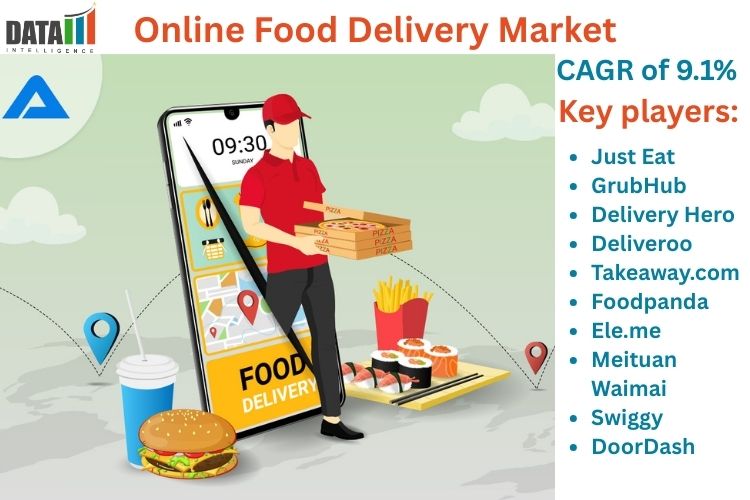
Online Food Delivery Market
The Global Online Food Delivery Market is expected to reach at a CAGR of 9.1% during the forecast period 2024-2031.
The Online Food Delivery Market is witnessing rapid expansion driven by digital adoption, changing consumer lifestyles, and growing demand for convenient dining solutions worldwide.”
AUSTIN, TX, UNITED STATES, February 27, 2026 /EINPresswire.com/ -- Market Overview:— DataM Intelligence
The Global Online Food Delivery Market has evolved into one of the fastest-growing segments within the digital commerce ecosystem, driven by changing consumer lifestyles, urbanization, and the widespread adoption of smartphones and internet connectivity. Online food delivery platforms connect restaurants, cloud kitchens, and consumers through mobile applications and web portals, enabling seamless ordering, digital payments, and doorstep delivery services. The growing preference for convenience-based consumption, coupled with busy work schedules and rising dual-income households, has significantly accelerated demand for app-based food delivery solutions worldwide.
To Download Sample Report Here: https://www.datamintelligence.com/download-sample/online-food-delivery-market
According to DataM Intelligence, The Online Food Delivery Market was valued at approximately USD 145.2 billion in 2022 and is projected to reach nearly USD 291.4 billion by 2030, growing at a compound annual growth rate (CAGR) of around 9.1% during the forecast period. The expansion of quick commerce models, integration of AI-driven recommendations, and partnerships between delivery platforms and restaurants are key factors propelling market growth. Additionally, subscription-based delivery models, attractive discounts, and improved logistics networks continue to strengthen consumer engagement and platform loyalty.
The platform-to-consumer delivery segment currently dominates the market, as aggregators offer broader restaurant choices, real-time tracking, and user-friendly payment systems. Geographically, Asia-Pacific leads the global Online Food Delivery Market due to its dense urban population, expanding middle-class consumer base, and rapid penetration of mobile applications across countries such as India, China, and Southeast Asian nations. The presence of strong regional players and aggressive digital adoption further reinforces the region’s leadership position.
Key Highlights from the Report:
Rising smartphone penetration and digital payment adoption are accelerating online food ordering trends globally.
Platform-based food delivery services account for the largest market share due to convenience and variety.
Asia-Pacific remains the leading regional market supported by urbanization and app-driven consumption habits.
Cloud kitchens and virtual restaurants are transforming operational efficiency in food delivery ecosystems.
Integration of AI, data analytics, and route optimization improves delivery speed and customer satisfaction.
Subscription models and loyalty programs are increasing customer retention across delivery platforms.
Market Segmentation:
The Online Food Delivery Market is segmented based on delivery model, platform type, payment mode, and end-user behavior, each contributing differently to industry expansion.
Based on the delivery model, the market is categorized into restaurant-to-consumer delivery and platform-to-consumer delivery. The platform-to-consumer segment dominates due to the aggregator model, where third-party platforms manage logistics, customer engagement, and payment processing. This model allows restaurants to expand their customer reach without heavy investment in delivery infrastructure. Meanwhile, restaurant-operated delivery services continue to grow among premium dining chains seeking direct customer relationships.
In terms of platform type, mobile applications represent the leading segment as consumers increasingly rely on smartphones for ordering meals. Mobile apps offer personalized recommendations, order tracking, digital wallets, and promotional incentives, enhancing user experience. Web-based ordering platforms remain relevant in corporate and bulk-ordering environments but hold comparatively smaller market share.
By payment mode, online payments including digital wallets, UPI systems, credit cards, and buy-now-pay-later options are gaining prominence over cash-on-delivery methods. Secure payment gateways and contactless transactions have further strengthened adoption following pandemic-driven behavioral shifts.
From an end-user perspective, individual consumers account for the majority of orders, particularly among urban millennials and Gen Z populations. However, corporate meal subscriptions and group ordering services are emerging as promising growth segments, especially in metropolitan business hubs.
Speak to Our Analyst and Get Customization in the report as per your requirements: https://www.datamintelligence.com/customize/online-food-delivery-market
Regional Insights:
North America represents a mature market characterized by high consumer spending power and strong adoption of digital food delivery platforms. The region benefits from advanced logistics infrastructure, widespread internet access, and strong collaboration between technology firms and restaurant chains. Increasing demand for convenience foods and subscription-based delivery services continues to sustain steady market expansion.
Europe demonstrates consistent growth supported by changing dietary preferences and increasing demand for diverse cuisines. Consumers across major economies are increasingly opting for sustainable packaging and eco-friendly delivery practices, encouraging companies to innovate in green logistics solutions.
Asia-Pacific dominates the Online Food Delivery Market due to rapid urban expansion, growing working populations, and rising disposable incomes. Countries such as India and China have witnessed exponential growth in online food ordering due to competitive pricing strategies, hyperlocal delivery networks, and aggressive marketing campaigns by leading platforms. The increasing popularity of cloud kitchens further strengthens regional scalability.
Latin America and the Middle East & Africa are emerging markets with significant untapped potential. Improving internet connectivity, digital payment adoption, and expansion of regional delivery startups are expected to drive future growth across these regions.
Market Dynamics:
Market Drivers
The primary driver of the Online Food Delivery Market is the growing demand for convenience-oriented services among modern consumers. Rapid urbanization and busy lifestyles have increased reliance on ready-to-eat meals delivered directly to homes and workplaces. Technological advancements such as AI-based recommendation engines, GPS tracking, and predictive analytics enhance operational efficiency and customer satisfaction. Furthermore, promotional campaigns, discounts, and subscription memberships encourage frequent ordering behavior, supporting sustained revenue growth for delivery platforms.
Market Restraints
Despite strong growth prospects, the market faces several challenges including high operational and logistics costs. Maintaining delivery fleets, managing last-mile logistics, and ensuring timely service remain expensive for platform operators. Profitability pressures, intense competition among market players, and commission-related disputes with restaurant partners also act as restraints. Additionally, concerns related to food quality control during delivery and packaging waste management continue to pose operational challenges.
Market Opportunities
Significant opportunities exist in the expansion of cloud kitchens, drone delivery trials, and autonomous delivery solutions. The integration of artificial intelligence and data-driven personalization enables platforms to optimize menus, pricing strategies, and delivery routes. Expansion into tier-2 and tier-3 cities, particularly in developing economies, presents immense growth potential. Moreover, increasing consumer demand for healthy meals, dietary-specific menus, and sustainable packaging solutions opens new avenues for innovation and differentiation within the Online Food Delivery Market.
Looking For Full Report? Get it Here: https://www.datamintelligence.com/buy-now-page?report=online-food-delivery-market
Frequently Asked Questions (FAQs):
How big is the Global Online Food Delivery Market currently?
What is the projected growth rate of the Online Food Delivery Market through 2032?
Who are the key players operating in the Online Food Delivery Market?
Which region is expected to dominate the Online Food Delivery Market during the forecast period?
What factors are driving demand in the global online food delivery industry?
Company Insights:
Key players operating in the Online Food Delivery Market include:
Just Eat
GrubHub
Delivery Hero
Deliveroo
Takeaway.com
Foodpanda
Ele.me
Meituan Waimai
Swiggy
DoorDash
Recent Developments:
United States:
February 2026: DoorDash introduced AR-based virtual menus in-app for immersive restaurant previews, enhancing conversion rates. DoorDash exited smaller international markets like Japan to refocus capital on US core growth, announcing workforce optimization.
January 2026: Instacart partnered with major chains for bundled grocery-meal deliveries, targeting family households with one-hour hybrid services. Uber Eats rolled out sustainable packaging mandates with compostable materials across 80% of its US fleet.
December 2025: Grubhub integrated generative AI chatbots for real-time order customization, reducing cart abandonment by enabling voice-activated tweaks. DoorDash acquired a cloud kitchen network to vertically integrate ghost kitchens in high-density cities.
November 2025: DoorDash expanded its DashPass subscription with AI-driven personalized meal recommendations, boosting user retention amid holiday season demand. Uber Eats launched drone delivery pilots in select suburban areas for faster cold-chain logistics.
Japan:
February 2026: Uber Eats tested autonomous micro-vehicles for last-mile delivery in Fukuoka, partnering with Yamato Transport. Foodpanda Japan rolled out contactless lockers in high-rises for 24/7 pickups.
January 2026: DoorDash announced full exit from Japan, ceding market share to local players like Wolt amid regulatory hurdles. Oisix Ra Daichi scaled AI-personalized grocery bundles with meal kits, growing urban subscriptions.
December 2025: Rakuten Delivery integrated voice-assistant ordering with LINE app, streamlining access for non-smartphone users. Menu Inc. launched eco-friendly bento packaging trials in Osaka, aligning with sustainability mandates.
November 2025: Uber Eats piloted AI route optimization in Tokyo, cutting peak-hour delays by 20% via real-time traffic prediction. Demae-can expanded subscription models with unlimited deliveries for seniors, tapping aging demographics.
Unlock 360° Market Intelligence with DataM Subscription Services: https://www.datamintelligence.com/reports-subscription
Conclusion:
The Online Food Delivery Market continues to redefine the global food service industry by merging technology, logistics, and consumer convenience into a highly scalable digital ecosystem. Rising smartphone adoption, evolving consumer lifestyles, and innovations such as cloud kitchens and AI-enabled delivery systems are expected to sustain long-term market expansion. While operational challenges and competitive pressures remain, expanding opportunities in emerging markets and technological advancements position the industry for substantial growth through the forecast period. As consumer expectations shift toward faster, personalized, and sustainable food delivery experiences, the Online Food Delivery Market is poised to remain a central pillar of the modern digital economy.
Related Reports:
Pet Meal Kit Delivery Market
Takeaway Food Market
Sai Kiran
DataM Intelligence 4Market Research
+1 877-441-4866
Sai.k@datamintelligence.com
Visit us on social media:
LinkedIn
X
Legal Disclaimer:
EIN Presswire provides this news content "as is" without warranty of any kind. We do not accept any responsibility or liability for the accuracy, content, images, videos, licenses, completeness, legality, or reliability of the information contained in this article. If you have any complaints or copyright issues related to this article, kindly contact the author above.
