

Cell Therapy Manufacturing Automation Market Outlook 2030: Market Size, CAGR, Trends And Forecast Analysis
Cell Therapy Manufacturing Automation Market
Cell Therapy Manufacturing Automation Market segments
Cell Therapy Manufacturing Automation Market industry
The Business Research Company’s Cell Therapy Manufacturing Automation Global Market Report 2026 – Market Size, Trends, And Forecast 2026-2035
LONDON, GREATER LONDON, UNITED KINGDOM, October 27, 2026 /EINPresswire.com/ -- The market for cell therapy manufacturing automation is evolving rapidly as demand for efficient, standardized, and scalable production solutions continues to intensify. This growth is driven by technological innovations in automation hardware and software, increasing commercialization of cell therapies, and stringent regulatory requirements. Let’s explore the current market size, key growth drivers, leading players, and future opportunities in this expanding sector.
Cell Therapy Manufacturing Automation Market Size and Expected Growth
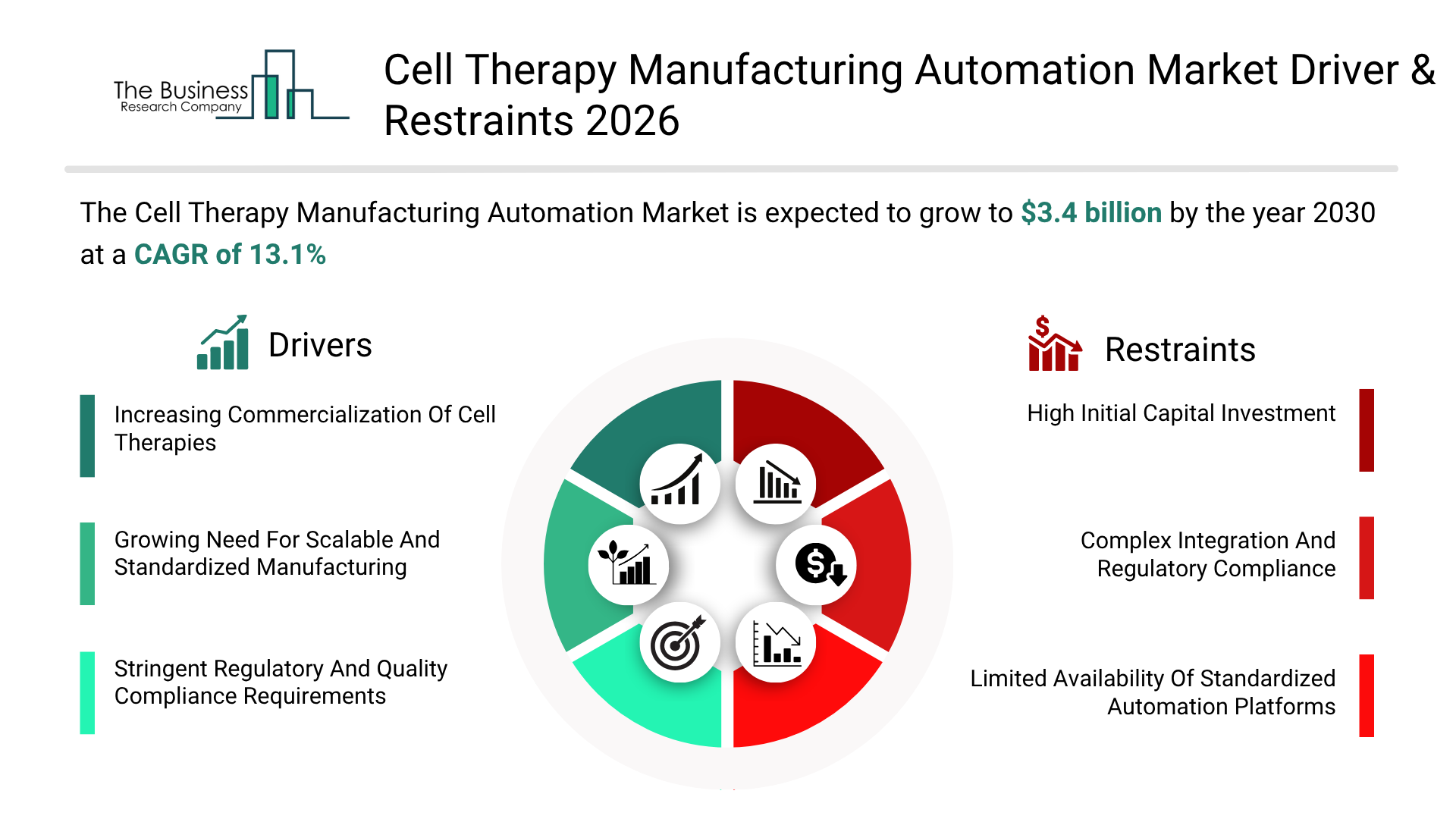
The cell therapy manufacturing automation market is forecast to surpass $3 billion by 2030. Positioned within the larger Medical Equipment sector, which is expected to reach $1,176 billion by the same year, this segment will hold close to 0.3% of the total market value. The anticipated compound annual growth rate (CAGR) leading up to 2030 is an impressive 13%, indicating strong ongoing expansion.
Request A Free Sample Of The Cell Therapy Manufacturing Automation Market Report
https://thebusinessresearchcompany.com/sample_request?id=93169603&type=smp&name=Cell%20Therapy%20Manufacturing%20Automation%20Market%20Report%202026&utm_source=EINPresswire&utm_medium=Paid&utm_campaign=Oct_PR
Dominance of Hardware in the Cell Therapy Manufacturing Automation Market
Among the three main components—hardware, software, and services—hardware is expected to account for the largest share by 2030, representing 47% or $2 billion of the overall market. This growth is propelled by rising demand for advanced automated cell processing instruments, sterile single-use devices, and high-throughput systems for cell isolation and expansion. Additional factors include progress in automated filling, harvesting, and cryopreservation technologies, investments in modular and adaptable manufacturing infrastructure, and the critical need for high-precision, standardized equipment that improves reproducibility and product quality.
Further Market Segmentation by Cell Type, Process, and End-User
The market segmentation also considers various dimensions such as cell types—including T-cells, stem cells, natural killer (NK) cells, and others. It is further divided by process stages like upstream processing, downstream processing, fill-finish, and quality control. End users encompass pharmaceutical and biotechnology companies, research institutions, contract manufacturing organizations (CMOs), and other relevant sectors.
Access The Detailed Cell Therapy Manufacturing Automation Market Report Here
https://thebusinessresearchcompany.com/report/cell-therapy-manufacturing-automation-market-report?utm_source=EINPresswire&utm_medium=Paid&utm_campaign=Oct_PR
Commercialization of Cell Therapies as a Key Growth Catalyst
The rapid commercialization of cell therapies is one of the main drivers propelling the cell therapy manufacturing automation market forward. As more treatments transition from clinical stages to large-scale production, manufacturers require consistent quality, higher output volumes, and strict adherence to regulatory standards—demands that manual processes struggle to meet. Automation addresses these challenges by standardizing workflows, minimizing contamination risks and human error, and enabling scalable production for both personalized and allogeneic therapies. This factor is expected to contribute roughly 1.5% annual growth to the market.
The Rising Demand for Scalable and Standardized Production Processes
As a growing number of products enter commercial markets, there is increasing pressure on manufacturers to deliver high-quality results at scale. Automated systems offer standardized, reproducible workflows with minimal manual intervention, coupled with continuous monitoring and optimized process control. These capabilities help meet global demand, maintain compliance, and reduce production costs, contributing an estimated 1.0% annual market growth.
Regulatory and Quality Compliance Requirements Fuel Market Expansion
Stringent regulatory demands for quality control, traceability, and comprehensive documentation across the manufacturing lifecycle are pushing manufacturers toward automation. Automated solutions provide real-time monitoring, electronic record-keeping, and standardized workflows that minimize errors and contamination. These features simplify validation processes, support Good Manufacturing Practice (GMP) compliance, facilitate audits, and accelerate product approvals. This driver is projected to add about 0.8% annual growth to the market.
North America Leading the Cell Therapy Manufacturing Automation Market
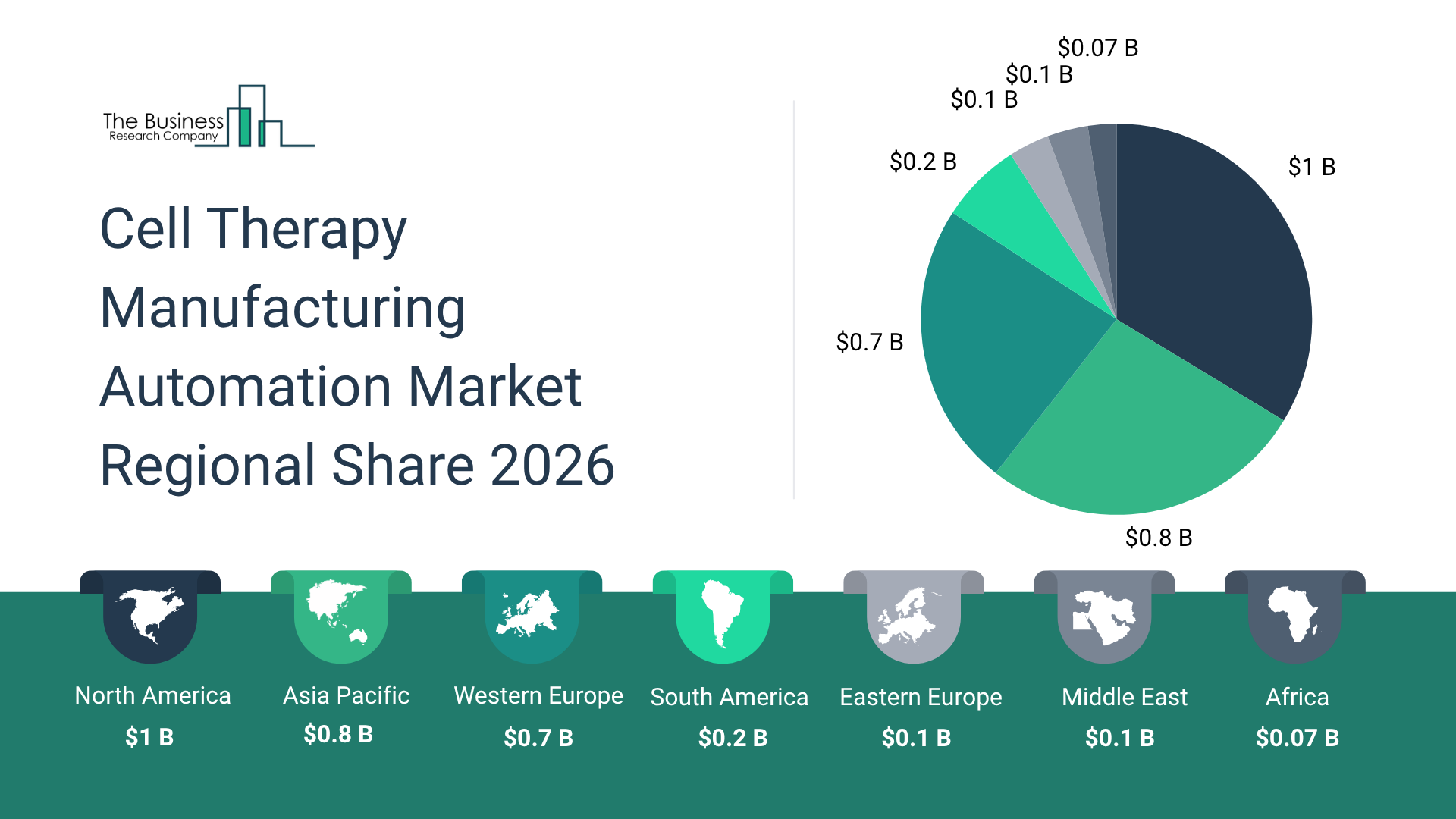
North America is set to remain the largest regional market for cell therapy manufacturing automation in 2030, valued at $1.3 billion, growing from $0.7 billion in 2025 with a CAGR of 13%. This growth is fueled by increased commercial manufacturing capacity, robust clinical trial activity for advanced cell therapies, widespread adoption of closed and automated systems, investments in GMP-compliant facilities, and close collaborations between biopharmaceutical firms and contract manufacturing organizations. The United States, in particular, is forecast to reach $1.1 billion by 2030, driven by numerous FDA approvals, expanded automated workflows, investments in next-generation bioprocessing, and integration of robotics and digital manufacturing.
Thermo Fisher Scientific’s Leadership Position in the Market
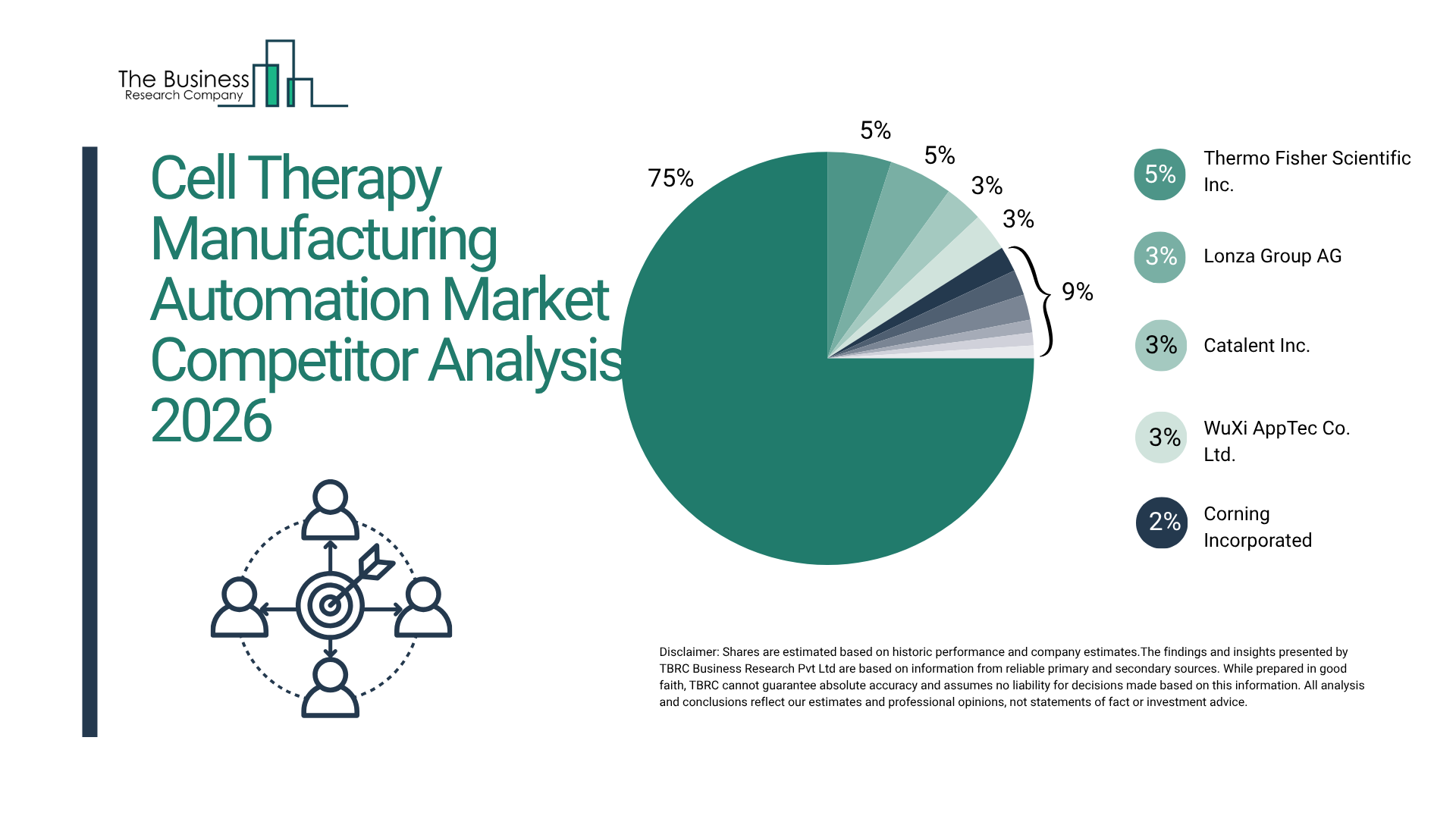
According to The Business Research Company, Thermo Fisher Scientific Inc. led global sales in 2025 with a 5% market share. Its bioproduction division supplies automated bioprocessing systems, cell culture solutions, digital monitoring platforms, and laboratory technologies tailored for cell therapy production, process optimization, and compliance with regulatory requirements.
Key Players Shaping the Industry Landscape
Prominent companies in the cell therapy manufacturing automation market include Thermo Fisher Scientific Inc., Lonza Group AG, Catalent Inc., WuXi AppTec Co. Ltd., Corning Incorporated, Sartorius AG, Fujifilm Holdings Corporation, Hitachi High Technologies Corp., Miltenyi Biotec, Merck KGaA, Ascential Medical & Life Sciences, National Resilience LLC, Terumo BCT Inc., Danaher Corporation (Cytiva), Minaris Regenerative Medicine LLC, Invetech Pty Ltd., Tulip Interfaces Inc., Cellares Inc., and Beckman Coulter Life Sciences.
Moderate Market Fragmentation with Room for Innovation and Collaboration
The market is moderately fragmented, with the top 10 players accounting for 25% of total revenue in 2025. This reflects the considerable technological and regulatory challenges in the sector, including strict manufacturing standards, complex automation requirements, and the need for consistent, reliable production. Key players maintain their influence through diversified product portfolios, partnerships with biopharma companies, global manufacturing and distribution networks, and ongoing innovation in automation and bioprocessing. As demand rises for scalable production and compliant infrastructure, collaborations, new product development, and geographic expansion are expected to further strengthen their market positions.
Competitive Strategies Employed by Market Leaders
Leading companies are competing by advancing automation technologies to boost efficiency and scalability, leveraging integrated platforms to enhance workflows and quality control, expanding manufacturing capabilities to meet compliance and capacity goals, and adopting AI-driven solutions to optimize monitoring and process management.
How Automation is Revolutionizing Cell Therapy Manufacturing
Automated cell therapy systems are radically transforming this market by simplifying multi-step workflows, reducing manual interventions, and enabling validated digital manufacturing. For example, in January 2024, Thermo Fisher Scientific Inc. introduced the gibco CTS cellmation software—an automation platform designed specifically for cell therapy manufacturing processes. This solution incorporates validated digital connectivity, DeltaV automation, and integrated instrument control to enhance traceability, reproducibility, and cGMP compliance throughout production.
Significant Growth Opportunities Across Market Segments
The combined hardware, software, and services sectors are expected to contribute over $2.3 billion in additional market value by 2030. Hardware and software segments are each projected to grow by approximately $1 billion, with services adding around $0.3 billion between 2025 and 2030. Growth drivers include the adoption of fully integrated automated manufacturing platforms, real-time process monitoring, digital quality control tools, manufacturing execution systems, analytics software, outsourced integration and validation services, advances in closed-system production, and efforts to reduce variability while accelerating commercial-scale manufacturing of advanced cell therapies.
Key Suppliers and End Users in the Market
Suppliers of critical raw materials and components include Thermo Fisher Scientific Inc., Merck KGaA, Sartorius AG, Danaher Corporation, Lonza Group AG, Miltenyi Biotec B.V. & Co. KG, Corning Incorporated, Avantor Inc., Cytiva, Eppendorf SE, Getinge AB, Bio-Rad Laboratories Inc., Agilent Technologies Inc., Becton Dickinson and Company, Fujifilm Holdings Corporation, Takara Bio Inc., STEMCELL Technologies Inc., PromoCell GmbH, Charles River Laboratories International Inc., Bio-Techne Corporation, Repligen Corporation, Hamilton Company, Tecan Group AG, Pall Corporation, and Terumo Corporation.
Major wholesalers and distributors comprise VWR International LLC, McKesson Corporation, Cardinal Health Inc., Thomas Scientific LLC, Cole-Parmer Instrument Company LLC, Labcompare, LabX.com, GenTech Scientific LLC, EquipNet Inc., Biocompare Inc., Medline Industries LP, Henry Schein Inc., BioSurplus Inc., LabRepCo LLC, Scientific Equipment Source LLC, American Laboratory Trading LLC, Praxair Distribution Inc., Airgas Inc., Wesco Scientific Inc., Spectrum Chemical Manufacturing Corp., LGC Standards GmbH, and Calibre Scientific Inc.
Notable end users include pharmaceutical and biotech leaders such as Novartis AG, Bristol Myers Squibb Company, Gilead Sciences Inc., Johnson & Johnson Innovative Medicine, Pfizer Inc., Roche Holding AG, AbbVie Inc., AstraZeneca PLC, Vertex Pharmaceuticals Incorporated, Bluebird Bio Inc., Adaptimmune Therapeutics plc, Legend Biotech Corporation, Caribou Biosciences Inc., Sana Biotechnology Inc., CRISPR Therapeutics AG, Fate Therapeutics Inc., Autolus Therapeutics plc, Century Therapeutics Inc., Iovance Biotherapeutics Inc., Cellares Corporation, and Ori Biotech Ltd.
Our 2026 market reports now include enhanced strategic insights through:
• Market attractiveness scoring and analysis
• Total addressable market (TAM) analysis
• Company scoring matrix graphics and tables
• Excel-based forecasting dashboards
• Market hotspots infographics
• Key technologies and future trend analysis
• Updated graphics and tables
Learn More About The Business Research Company
The Business Research Company (www.thebusinessresearchcompany.com) is a leading market intelligence firm renowned for its expertise in company, market, and consumer research. We have published over 30,000+ reports across 27 industries and 60+ geographies. Our research is powered by 1,500,000 datasets, extensive secondary research, and exclusive insights from interviews with industry leaders.
We provide continuous and custom research services, offering a range of specialized packages tailored to your needs, including Market Entry Research Package, Competitor Tracking Package, Supplier & Distributor Package and much more.
Disclaimer: Please note that the findings, conclusions and recommendations that TBRC Business Research Pvt Ltd delivers are based on information gathered in good faith from both primary and secondary sources, whose accuracy we are not always in a position to guarantee. As such TBRC Business Research Pvt Ltd can accept no liability whatever for actions taken based on any information that may subsequently prove to be incorrect. Analysis and findings included in TBRC reports and presentations are our estimates, opinions and are not intended as statements of fact or investment guidance.
Contact Us:
The Business Research Company
Americas +1 310-496-7795
Europe +44 7882 955267
Asia & Others +44 7882 955267 & +91 8897263534
Email: marketing@tbrc.info
Follow Us On:
LinkedIn: https://in.linkedin.com/company/the-business-research-company
Oliver Guirdham
The Business Research Company
+ +44 7882 955267
info@tbrc.info
Visit us on social media:
LinkedIn
Facebook
X
Legal Disclaimer:
EIN Presswire provides this news content "as is" without warranty of any kind. We do not accept any responsibility or liability for the accuracy, content, images, videos, licenses, completeness, legality, or reliability of the information contained in this article. If you have any complaints or copyright issues related to this article, kindly contact the author above.
